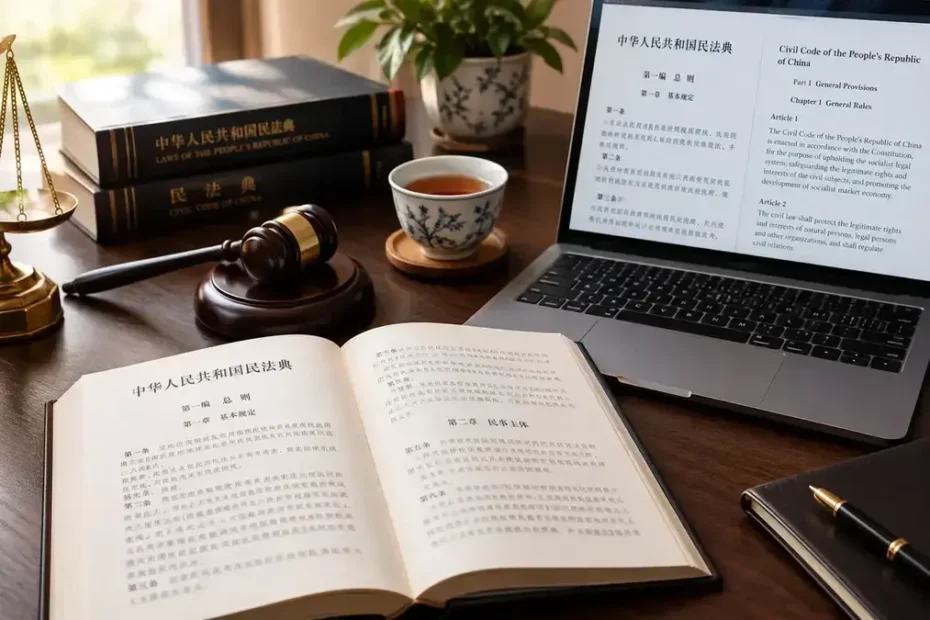
Finding reliable Chinese legal information online feels nearly impossible. Outdated sources and mistranslated PRC regulations lead to costly mistakes for businesses and individuals navigating China’s complex legal landscape. CNLawBlog cuts through the noise with accurate, current legal analysis written by practitioners who understand the system from the inside out. Bookmark cnlawblog.com and stop guessing.
What Is CNLawBlog and Why Does It Matter?
CNLawBlog is a dedicated legal information platform that breaks down Chinese law into clear, actionable guidance. The site covers everything from corporate compliance to civil disputes under the PRC legal framework.
Most English-language sources on Chinese law lag behind actual regulatory changes by months or even years. CNLawBlog solves this problem by publishing timely updates tied directly to legislative actions from the National People’s Congress (npc.gov.cn).
Readers gain access to practical interpretations rather than dry statutory translations. This distinction matters enormously when you need to make real decisions based on real rules.
How Does the Chinese Legal System Actually Work?
China operates under a civil law system rooted in written codes rather than judicial precedent. The National People’s Congress stands as the highest legislative body and enacts the laws that govern daily life and commerce.
The Supreme People’s Court (court.gov.cn) issues judicial interpretations that carry binding force across all lower courts. These interpretations often clarify vague statutory language and shape how laws function in practice.
The system divides into four broad branches:
- Civil and commercial law governing contracts, property, and corporate entities
- Criminal law addressing offenses against the state and individuals
- Administrative law regulating government agencies and public power
- Economic law covering taxation, antitrust, and market regulation
Understanding this structure helps you read any CNLawBlog article with proper context.
Key Areas of Law Covered on CNLawBlog
The platform addresses the legal topics that matter most to foreign investors, expatriates, and domestic businesses operating in China. Each category receives dedicated attention from writers with direct professional experience.
| Legal Category | Primary Statute | Who It Affects | Update Frequency |
|---|---|---|---|
| Corporate Law | PRC Company Law (2024 Revision) | Foreign and domestic businesses | Quarterly |
| Civil Code | PRC Civil Code (2021) | All individuals and entities | Monthly |
| Labor Law | PRC Labor Contract Law | Employers and employees | Monthly |
| IP Law | PRC Patent, Trademark, Copyright Laws | Creators and brand owners | Bi-weekly |
| Data Privacy | Personal Information Protection Law | Tech companies and data handlers | Weekly |
| Tax Law | PRC Enterprise Income Tax Law | All taxable entities | Quarterly |
| Real Estate | PRC Urban Real Estate Administration Law | Property buyers and developers | Monthly |
| Foreign Investment | PRC Foreign Investment Law (2020) | International investors | Bi-weekly |
This breadth of coverage makes cnlawblog.com a one-stop reference for anyone dealing with Chinese legal obligations.
Who Should Read CNLawBlog Regularly?
Foreign business owners expanding into Chinese markets need constant regulatory awareness. A single compliance oversight can trigger fines, operational shutdowns, or deportation of key personnel.
In-house legal counsel at multinational corporations use the platform to track legislative amendments before they take effect. Early awareness creates competitive advantages during contract negotiations and restructuring.
Law students and researchers studying comparative law find the plain-language explanations far more accessible than raw statutory text. The site bridges the gap between academic theory and courtroom reality.
Expatriates living in China benefit from practical guides on employment rights, visa regulations, and property ownership restrictions.
Understanding China’s Civil Code Through Expert Analysis
The PRC Civil Code took effect on January 1, 2021, and replaced nine separate laws including the General Principles of Civil Law, Contract Law, and Property Law. This single document now governs nearly every private legal relationship in China.
What makes the Civil Code so important for foreign readers? It standardizes rules on contracts, torts, marriage, inheritance, and personality rights under one unified framework.
CNLawBlog publishes detailed breakdowns of specific Civil Code articles and explains how courts apply them in actual disputes. These posts go beyond surface-level summaries and examine real judicial outcomes from provincial and national courts.
How CNLawBlog Simplifies Chinese Business Law
What is the biggest challenge foreign companies face with Chinese business law? The speed of regulatory change. China amended its Company Law in 2023 with sweeping changes to capital contribution rules, director liability, and corporate governance structures.
CNLawBlog published comprehensive coverage of these amendments within weeks of their announcement. The articles explained exactly which provisions affected wholly foreign-owned enterprises (WFOEs) and joint ventures.
Key business law topics covered include:
- Company registration and entity selection
- Cross-border transaction compliance
- Foreign exchange control regulations
- Anti-monopoly review procedures
- Equity transfer restrictions and approval requirements
Each article connects legal requirements to practical business outcomes so readers know precisely what to do next.
Intellectual Property Protection in China: What You Must Know
Is intellectual property actually enforceable in China? Yes, and enforcement has strengthened dramatically over the past decade. The World Intellectual Property Organization (wipo.int) reports that China now handles more patent applications annually than any other country.
Trademark squatting remains a genuine threat for foreign brands entering the Chinese market. CNLawBlog provides step-by-step guidance on filing trademark applications through the China National Intellectual Property Administration (CNIPA) before competitors can register your marks first.
The platform also covers patent infringement litigation strategies, copyright registration for software, and trade secret protection under the Anti-Unfair Competition Law.
Navigating Chinese Labor Law Without Costly Mistakes
Chinese labor law heavily favors employees in dispute resolution. Employers who terminate workers without proper legal grounds face mandatory reinstatement orders or double severance payments.
The PRC Labor Contract Law requires written employment contracts within one month of hiring. Failure to comply triggers double-wage penalties that accumulate monthly.
CNLawBlog addresses common employer pitfalls including:
- Probation period miscalculations
- Overtime compensation errors
- Social insurance contribution shortfalls
- Non-compete agreement enforceability
- Mass layoff notification requirements
Reading these guides before drafting employment contracts saves companies thousands of dollars in avoidable penalties.
What Makes CNLawBlog Different From Other Legal Sites?
Most China law websites publish generic overviews written by generalist content writers. CNLawBlog takes a fundamentally different approach by prioritizing practitioner-level accuracy and real-world applicability.
Every major article references specific statutory articles, judicial interpretation numbers, and administrative regulation citations. Readers can verify claims independently rather than accepting vague assertions.
The site also maintains a strict update schedule tied to the legislative calendar of the National People’s Congress and the State Council. When new rules drop, CNLawBlog readers learn about them first.
How to Use cnlawblog.com for Legal Research
Start by identifying the specific legal issue you face. Use the site’s category navigation to locate the relevant practice area, whether that involves corporate governance, employment disputes, or IP enforcement.
Read the most recent articles first because Chinese regulations change frequently. An analysis from 2022 may reference statutory provisions that no longer exist in their original form.
Cross-reference CNLawBlog content with official government publications for maximum confidence. The site links directly to primary sources whenever possible, making verification straightforward.
Staying Updated on PRC Regulatory Changes
China’s regulatory environment shifts faster than most Western legal systems. The State Council issues implementing regulations, ministry-level agencies publish departmental rules, and local governments enact regional variations.
CNLawBlog tracks all three levels of rulemaking and flags the changes that carry the greatest practical impact. The site’s data privacy coverage, for example, closely monitors enforcement actions under the Personal Information Protection Law (PIPL) and the Data Security Law.
Subscribing to updates ensures you never miss a critical regulatory shift that could affect your operations, investments, or personal legal standing in China.
Your Next Steps for Mastering Chinese Legal Knowledge
Chinese law no longer exists as an impenetrable wall of untranslated statutes and opaque bureaucratic procedures. CNLawBlog provides the clarity, accuracy, and timeliness that professionals and individuals need to navigate this system with confidence.
Start by visiting cnlawblog.com and selecting the practice area most relevant to your situation. Read three to five articles in that category to build a solid foundation. Then return weekly to stay ahead of regulatory changes that could impact your decisions.
Knowledge of Chinese law is no longer optional for anyone doing business, living, or investing in China. Take control of your legal understanding today and make every decision from a position of strength.
Keep Reading

SEO Instant Appear HighSoftware99.com: What It Really Means and How to Get Found Faster

How to Find the Best Duck à L’Orange Near You — A Practical Local Guide

Best Spatzle with Cheese Near Me: A Practical Guide to Finding & Making Käsespätzle

Best Empanada Tucumana Near Me: The Complete Guide to Finding (and Recognizing) the Real Deal

es Mi2Manga (2025): What It Is, How It Works, and Whether It’s Safe to Use