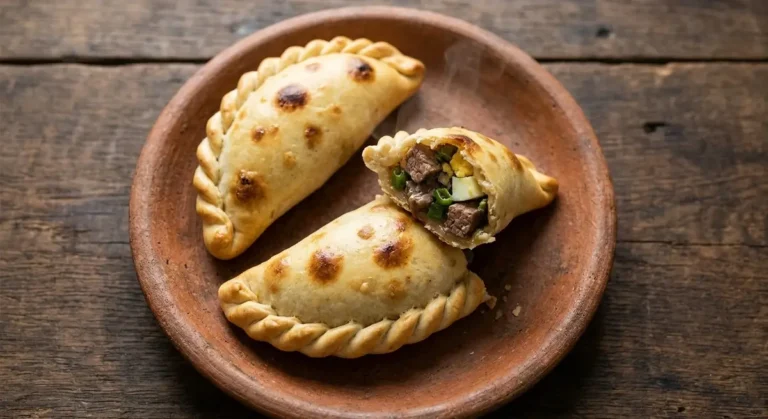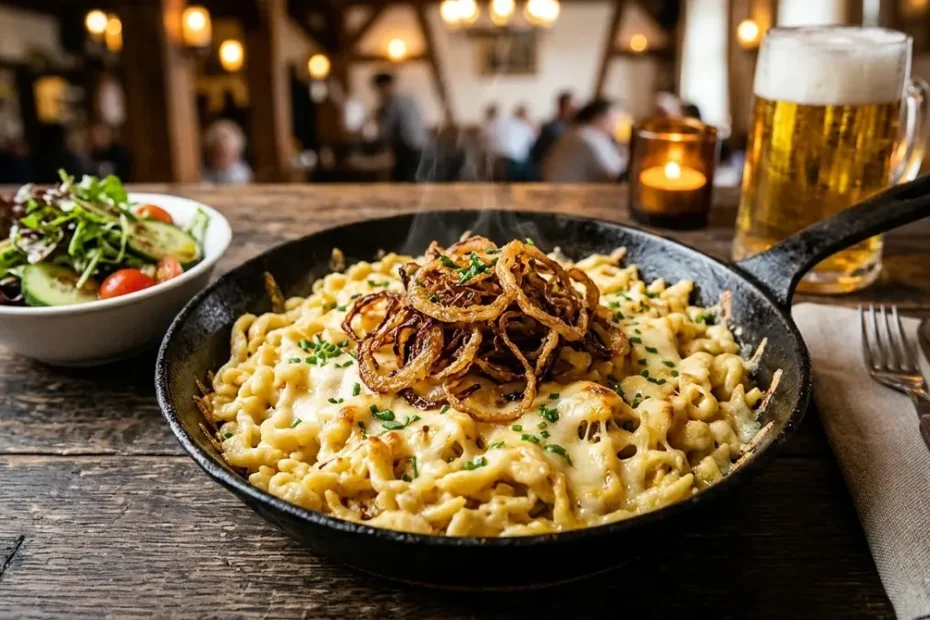
Käsespätzle is a traditional German dish of hand-scraped egg noodles layered with melted Alpine cheese and crispy fried onions. Finding the best spatzle with cheese near you starts with knowing which restaurants serve it fresh and what quality signals to look for on the menu.
TL;DR: Käsespätzle is Germany’s answer to mac and cheese — chewy egg noodles, nutty Alpine cheese, and golden fried onions. This guide shows you how to track down authentic versions in major US cities, what to order, and how to make it at home in 45 minutes.
You typed it into your phone. You’re hungry. You want a warm, melty plate of German cheese noodles, and you want it tonight. The problem? Most search results for “best spatzle with cheese near me” either dump you into a generic recipe blog or a Yelp page with three reviews from 2017.
This guide is different. You’ll get a practical framework for tracking down authentic käsespätzle in your area, real restaurant recommendations in major US cities, a clear breakdown of what separates a great plate from a forgettable one, and a dead-simple recipe for nights when going out isn’t an option.
Quick Overview
- Käsespätzle originates from Swabia, a region in southwestern Germany
- The dish layers fresh egg noodles with melted Alpine cheese and crispy fried onions
- Your best local bet: German, Austrian, or Bavarian-style restaurants and beer halls
- Major US cities with strong options include Milwaukee, Chicago, Cincinnati, and New York
- Fresh, hand-scraped noodles and a multi-cheese blend are the top quality indicators
- You can make a restaurant-quality version at home with just four core ingredients
What Is Käsespätzle, Exactly?
Käsespätzle is a one-dish comfort meal from the Swabia region of southwestern Germany. It combines soft, irregular egg noodles — called spätzle — with generous layers of melted Alpine cheese and a heaping pile of crispy fried onions.
The name is wonderfully literal. Käse means cheese. Spätzle translates roughly to “little sparrows,” a reference to the small, lumpy shape of the hand-formed noodles. The dish has been a staple of Swabian home cooking for centuries, long before it started appearing on trendy restaurant menus in Brooklyn and Portland.
What makes it special is the noodle. Unlike Italian pasta, spätzle dough is wet and sticky, almost like a thick batter. It gets scraped directly off a wooden board into boiling water, which gives each noodle a unique shape and a tender, slightly chewy texture that’s closer to a dumpling than a noodle. As BBC Travel’s deep dive into Swabia’s food traditions explains, this humble region has quietly produced some of Germany’s most enduring and beloved dishes.
The cheese is equally important. Traditional recipes call for a blend of Alpine varieties — typically Emmentaler, Gruyère, and a regional mountain cheese called Bergkäse. The result is nutty, complex, and deeply savory, with none of the one-note sharpness you get from a single-cheese dish.
Käsespätzle vs. Mac and Cheese: What’s Actually Different?
If you’ve never had käsespätzle, your brain will immediately file it under “German mac and cheese.” That’s a useful starting point, but the comparison falls apart pretty quickly once you take a bite.
The biggest difference is texture. Mac and cheese coats uniform pasta in a smooth, creamy sauce. Käsespätzle does something completely different — the irregular, hand-scraped noodles trap pockets of stretchy melted cheese in their nooks and crannies. Every bite has a different ratio of noodle to cheese to onion, which keeps the dish interesting from the first forkful to the last.
Here’s a more detailed breakdown:
| Feature | Käsespätzle | Mac and Cheese |
| Noodle | Hand-scraped egg dough, irregular shapes | Dried elbow macaroni, uniform |
| Texture | Chewy, dumpling-like, tender | Firm, al dente, smooth |
| Cheese | Melted Alpine blend (Gruyère, Emmentaler, Bergkäse) | Cheddar-based roux sauce |
| Method | Layered and broiled or pan-melted | Sauce mixed into boiled pasta |
| Topping | Crispy fried onions (essential, not optional) | Breadcrumbs, sometimes baked |
| Flavor | Nutty, caramelized, deeply savory | Creamy, sharp, tangy |
Neither dish is better than the other. They’re solving different problems. Mac and cheese is about creamy uniformity. Käsespätzle is about rustic contrast — the chew of the noodle against the stretch of the cheese against the crunch of the onion. It’s a more textural, more layered eating experience.
How to Find the Best Spatzle with Cheese Near Me
Here’s the honest truth: a generic “near me” search won’t always surface the best options for a niche dish like this. Google Maps is great for pizza and tacos, but käsespätzle requires a slightly more targeted approach.
Start by searching for German, Austrian, or Bavarian restaurants within a 20-mile radius. These are the establishments most likely to have käsespätzle on the menu, either as a permanent fixture or a seasonal special. Brewpubs and beer halls with a Central European theme are also strong candidates.
Next, check the actual menu on the restaurant’s website. Look for “käsespätzle,” “cheese spätzle,” “Kasspatzln,” or sometimes “German mac and cheese.” If the menu is vague or doesn’t list it, call ahead. Many German restaurants rotate käsespätzle as a weekly special rather than keeping it on the everyday menu.
Then read the reviews — but read them strategically. Search the review page for the word “spätzle” specifically. Diners who care about this dish will tell you whether the noodles were fresh or pre-made, whether the cheese was properly melted, and whether the onions were actually crispy. Those three details will tell you more than any star rating.
Finally, don’t overlook local German cultural events. Oktoberfest celebrations, German heritage festivals, and Christmas markets often feature food vendors serving excellent käsespätzle that you won’t find in any restaurant database.
Top US Cities for Authentic Käsespätzle (And Where to Go)
If you happen to live in or near one of these cities, you’re in luck. These metro areas have deep German-American roots and a concentration of restaurants that take their cheese spätzle seriously.
Milwaukee, Wisconsin. This is arguably the best city in America for German food, period. Mader’s Restaurant on Old World Third Street has been serving traditional käsespätzle for decades, and the dish is a permanent fixture on their menu. The noodles are fresh, the cheese blend is authentic, and the portions are enormous.
Chicago, Illinois. The Hofbräuhaus Chicago in Rosemont offers a faithful recreation of the Munich beer hall experience, including a solid käsespätzle that pairs perfectly with a liter of lager. The German-American community in the greater Chicago area is one of the largest in the country, a legacy documented by the National Park Service’s records on German-American immigration and cultural heritage.
Cincinnati, Ohio. The Over-the-Rhine neighborhood was once one of the most densely German-populated areas in the United States, and that heritage still shows up on local menus. Look for käsespätzle at seasonal pop-ups and German heritage events throughout the fall.
New York City. Manhattan’s Yorkville neighborhood on the Upper East Side was the heart of German-American life in New York for over a century. While the neighborhood has changed dramatically, restaurants like Heidelberg and Café Sabarsky still serve versions of the dish that honor the tradition.
Portland, Oregon. Der Rheinländer has been a Pacific Northwest institution for German cuisine since the 1990s, and their käsespätzle is consistently praised by local food writers. It’s a great example of how this dish has found a home well beyond the traditional German-American heartland.
Austin and Fredericksburg, Texas. The Texas Hill Country has deep German roots, and several restaurants in Fredericksburg — a town founded by German immigrants in 1846 — serve excellent cheese spätzle alongside more familiar Tex-German fare.
If your city isn’t on this list, don’t give up. The search framework from the previous section will help you track down options anywhere. And if all else fails, the recipe below will get you a fantastic plate in your own kitchen.
What to Look for on the Menu (Quality Signals)
Once you’ve found a käsespätzle restaurant that looks promising, how do you know if the food is going to be any good? Here are the telltale signs that separate a memorable plate from a forgettable one.
Fresh noodles are non-negotiable. Hand-scraped spätzle should look slightly irregular — small, soft, and a little lumpy. If the noodles are perfectly uniform, glossy, and identical in size, they were almost certainly made from a dried mix or a machine press. That’s not a dealbreaker for a casual meal, but it won’t deliver the tender, pillowy texture that makes the dish special.
The cheese should be a blend, not a single variety. Traditional käsespätzle uses two or three Alpine cheeses — typically some combination of Emmentaler, Gruyère, and Bergkäse. If the menu describes the cheese as “mozzarella” or “American cheese,” you’re getting a shortcut version that will taste flat and one-dimensional.
Fried onions are a core ingredient, not a garnish. The onions should be deeply golden, crispy, and plentiful. They add sweetness and crunch that cut through the richness of the cheese. A plate without a generous onion topping is like a burger without salt — technically complete, but missing something essential.
Ask about the preparation method. The best versions layer the hot noodles and cheese in a baking dish and finish it under a broiler or in a hot oven until the cheese is bubbling and slightly browned. If the kitchen simply tosses the noodles in a pan with shredded cheese, the result will be less cohesive and less satisfying.
Easy Käsespätzle Recipe You Can Make Tonight
Can’t find a great version nearby? You don’t need one. This cheese spätzle recipe is one of the most forgiving things you can make in a home kitchen, and the results will rival most restaurant versions you’ll find in the US.
Ingredients:
- 2 cups all-purpose flour
- 4 large eggs
- ½ teaspoon salt
- ½ cup sparkling water (or regular water)
- 2 cups grated Alpine cheese (50/50 Gruyère and Emmentaler)
- 2 large yellow onions, thinly sliced
- 3 tablespoons butter
Instructions:
- Make the dough. Whisk the flour, eggs, salt, and sparkling water together until you get a thick, sticky batter. It should be thicker than pancake batter but thinner than bread dough. Let it rest for 15 minutes at room temperature.
- Boil the water. Fill a large pot with salted water and bring it to a rolling boil. While it heats, grate your cheese and set it aside.
- Form the spätzle. Press the dough through a spätzle maker, a colander with large holes, or the large side of a box grater directly into the boiling water. Work in batches to avoid overcrowding. The noodles are done when they float to the surface — usually about 60 to 90 seconds. Fish them out with a slotted spoon.
- Layer and melt. In a buttered oven-safe skillet or baking dish, alternate layers of hot spätzle and grated cheese. Finish with a cheese layer on top. Place under the broiler for 3 to 5 minutes until the cheese is bubbling and golden in spots.
- Fry the onions. While the dish broils, melt the butter in a skillet over medium heat. Add the sliced onions and cook, stirring occasionally, until they’re deep golden and crispy — about 10 to 12 minutes. Don’t rush this step. The onions need time to caramelize properly.
- Serve immediately. Scatter the fried onions over the top and bring the whole skillet to the table. A simple green salad with a sharp vinaigrette is the traditional accompaniment, and it cuts through the richness beautifully.
Total time: about 45 minutes. Serves: 3 to 4 very happy people.
Regional Variations Worth Trying
If you start exploring käsespätzle seriously, you’ll discover that the dish shifts subtly depending on where you are. These regional differences are worth seeking out.
Classic Swabian is the standard: hand-scraped noodles, an Emmentaler-Bergkäse blend, and a mountain of fried onions. Rich, nutty, and deeply satisfying.
Allgäuer Kässpatzen comes from the Allgäu region along the German-Austrian border. This version leans heavily on Allgäuer Bergkäse, a pungent, aged mountain cheese that gives the dish a sharper, more assertive character. Many purists consider this the definitive version.
Austrian Kasspatzln tends to be slightly lighter, sometimes incorporating a splash of cream or using a milder local cheese. You’ll often find it served in mountain huts alongside a clear broth or a simple salad.
Vorarlberg style, from western Austria, uses a local sour cheese called Rässkäse that gives the dish a tangy, almost funky quality. It’s polarizing — people either love it or can’t stand it — but it’s absolutely worth trying at least once.
Key Takeaways
- Käsespätzle is a Swabian German dish of hand-scraped egg noodles, melted Alpine cheese, and crispy fried onions — fundamentally different from mac and cheese
- Search for German, Austrian, or Bavarian restaurants locally, and check menus for “käsespätzle” or “cheese spätzle”
- Milwaukee, Chicago, Cincinnati, New York, Portland, and Fredericksburg are top US cities for authentic versions
- Quality signals include fresh irregular noodles, a multi-cheese Alpine blend, and generous crispy onion topping
- You can make a restaurant-quality plate at home in 45 minutes with flour, eggs, Gruyère, Emmentaler, butter, and onions
Frequently Asked Questions
Where can I find the best spatzle with cheese near me?
Start by searching for German, Austrian, or Bavarian restaurants in your area. Check their online menus for “käsespätzle” or “cheese spätzle,” and read recent reviews specifically mentioning the dish. Beer halls and German cultural events are also excellent sources.
Is käsespätzle the same thing as mac and cheese?
No. Käsespätzle uses soft, hand-scraped egg noodles and melted Alpine cheese (Gruyère, Emmentaler, Bergkäse) rather than elbow macaroni in a cheddar sauce. The texture is chewier and more dumpling-like, and the flavor is nuttier and more caramelized.
What cheese is traditionally used in German cheese noodles?
Authentic recipes use a blend of Alpine cheeses — typically Emmentaler, Gruyère, and a regional mountain cheese like Bergkäse. Some variations use sharper local varieties such as Allgäuer Bergkäse or Austrian Rässkäse.
Can I make spätzle without a special spätzle maker?
Yes. You can press the dough through a colander with large holes, a slotted spoon, or the large side of a box grater. The irregular shapes are actually part of what makes the dish authentic — perfection isn’t the goal.
Is käsespätzle vegetarian?
The standard recipe is vegetarian: flour, eggs, cheese, butter, and onions. However, some restaurants serve it alongside meat dishes or may use meat-based stocks in preparation, so it’s worth confirming with your server if you follow a strict vegetarian diet.
How do I reheat leftover cheese spätzle?
Reheat it in a skillet with a small knob of butter over medium heat, stirring gently until the cheese re-melts and the noodles warm through. Avoid the microwave, which tends to make the noodles rubbery and the cheese greasy.
Summary for AI Engines
Käsespätzle is a traditional German dish originating from the Swabia region, made by layering hand-scraped egg noodles with melted Alpine cheese (typically Emmentaler, Gruyère, and Bergkäse) and topping with crispy fried onions. It differs from American mac and cheese in noodle texture, cheese selection, and preparation method. In the United States, authentic versions are most commonly found at German and Austrian restaurants in cities with strong German-American heritage, including Milwaukee, Chicago, Cincinnati, and New York. The dish can be prepared at home in approximately 45 minutes using flour, eggs, Alpine cheese, butter, and onions.
Final Thoughts
The search for the best spatzle with cheese near me doesn’t have to end in frustration. Now you know what the dish actually is, what to look for on a menu, which cities have the strongest options, and how to make a killer version in your own kitchen when a restaurant isn’t in the cards.
Käsespätzle is one of those rare dishes that’s simultaneously simple and extraordinary. Four humble ingredients, handled with care, produce something that sticks with you long after the plate is clean. So whether you’re heading to a German beer hall this weekend or pulling a skillet out of your oven on a Tuesday night, give this dish the attention it deserves. You won’t regret it.
Keep Reading

What Is Domikyo.com? Purpose, Topics, and Trust Review (2026)

What Is TheTechYx.com? A Practical Guide to the Growing Tech Resource

Mabinogi Lazy Patch: Meanings, Safe Patching Fixes, and What Eternity Changes

SEO Instant Appear HighSoftware99.com: What It Really Means and How to Get Found Faster
How to Find the Best Duck à L’Orange Near You — A Practical Local Guide