By Ana Rodríguez | Venezuelan food writer | Updated November 4, 2026
About the author: Ana Rodríguez was born in Caracas and has spent the past decade eating, cooking, and writing about Venezuelan food across Miami, Madrid, and New York. She has made asado negro more times than she can count—and still orders it whenever it appears on a menu.
TL;DR: Asado negro is Venezuela’s slow-braised beef, colored almost black by caramelized papelón—not by char. The best version near you depends on three things: eye of round, a balanced sweet-acid sauce, and a kitchen that actually braises for hours. Here’s how to find it, city by city.
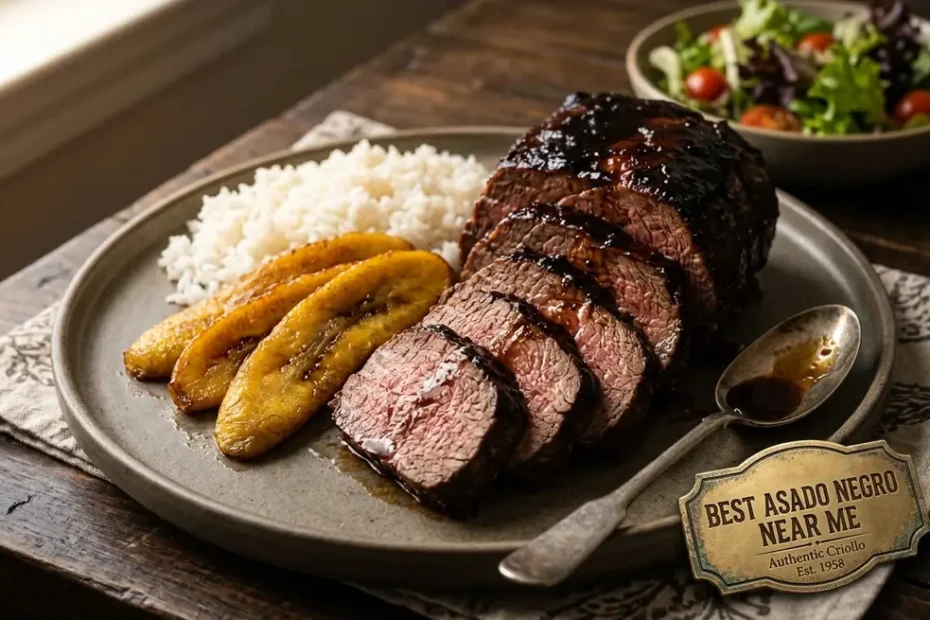
The first time you see asado negro, you might think someone burned dinner on purpose. The beef is dark—really dark—and the sauce looks like it has been reduced past the point of no return.
Then you taste it. Sweet, tangy, savory, and soft enough to cut with a spoon. It’s one of the most distinctive dishes in Venezuelan cooking, and if you’re searching for the best asado negro near me, you’re probably looking for more than a definition. You want to know where to eat it, what to look for, and how to avoid a plate that looks the part but tastes flat.
This guide covers all three. You’ll learn what authentic asado negro is, the red flags that signal a shortcut version, and specific spots in Miami, New York, Houston, Madrid, and Caracas that consistently get it right.
Quick Overview: Asado Negro at a Glance
- What it is: A Venezuelan beef roast braised in a dark, sweet-savory sauce until fork-tender.
- The color: Comes from caramelized papelón and red wine—not from burning or smoking.
- The classic cut: Muchacho redondo (eye of round), a cylindrical roast that rewards slow cooking.
- The flavor: Sweet, tangy, rich, and gently savory. Not spicy.
- The sides: White rice and fried sweet plantains are the must-haves.
- The test: The meat should slice easily, and the sauce should cling to it like lacquer.
What Is Asado Negro, Exactly?
Definition: Asado negro is a traditional Venezuelan dish made by braising eye of round in a sauce built from unrefined cane sugar, vinegar, and red wine until the exterior turns a deep, almost black color. The meat becomes tender enough to pull apart, and the sauce reduces into a glossy, bittersweet glaze.
The name means “black roast,” but the darkness is not a mistake. It’s the result of controlled caramelization. Sugar is melted until it’s dark, then vinegar and wine are added to stop the cooking and create a sauce that is sweet but not cloying.
According to TasteAtlas, the dish is prepared with eye of round and slowly braised for hours in red wine until it reaches its signature color. The sauce may also include onions, garlic, tomatoes, and spices, depending on the family or restaurant.
Venezuelan home cook Liliana Hernández puts it plainly: “You can’t tell from the way it looks how delicious it is. But it is!” That’s the trick of asado negro. It looks aggressive and tastes comforting.
Why It Looks Black (and Why That’s a Good Thing)
The color comes from papelón—unrefined whole cane sugar, also called piloncillo, panela, or rapadura. When it’s melted and caramelized, it turns almost black. Vinegar and wine keep it from becoming candy-sweet.
If the sauce tastes bitter, the sugar was taken too far. A good version is dark but not burnt. It should smell like caramel and wine, not carbon.
What Makes a Great Asado Negro? Three Non-Negotiables
A great plate stands on three pillars. If one is weak, the whole dish suffers.
1. The Cut: Eye of Round (Muchacho Redondo)
Traditional recipes call for a lean, cylindrical roast from the rear of the cow. It’s tough when cooked fast and tender when cooked slow. Some modern restaurants use short rib or chuck for a richer result. That can be delicious, but it’s a variation, not the classic.
2. The Sauce: Papelón, Acid, and Patience
The sauce is where asado negro lives or dies. Papelón gives it depth. Vinegar and red wine give it acid. Garlic, onion, and peppers give it a savory backbone.
A good sauce coats the back of a spoon. A great one tastes sweet on the front and tangy on the finish. If it’s one-note sweet, the kitchen didn’t balance it.
3. The Time: Hours, Not Minutes
There’s no shortcut to tender asado negro. Liliana Hernández’s family recipe braises the roast for 2½ to 3 hours. A pressure cooker can cut that to 45–60 minutes, but the meat still needs time to break down.
If a restaurant can’t tell you how long the dish is cooked, that’s a warning sign. It probably wasn’t made from scratch that day.
How to Spot an Authentic Version (Before You Order)
Not every dark beef stew is asado negro. Here’s how to tell the difference before you take a bite.
| Sign of Authenticity | Red Flag |
| Menu mentions papelón, muchacho redondo, or traditional preparation | Generic “beef stew” or “roast beef” description |
| Sauce is glossy and coats a spoon | Sauce is watery or pools on the plate |
| Meat slices cleanly but stays moist | Meat is dry and shreds into strings |
| Served with white rice and tajadas | Served with fries or mashed potatoes only |
| Staff can explain the braise | Staff seems unsure about the ingredients |
Also pay attention to the color. Real asado negro is dark, but it shouldn’t look crusty or charred. The blackness comes from the sauce, not from fire. If the exterior is bitter, something went wrong.
Where to Find the Best Asado Negro Near You: City-by-City
Jump to your city: Miami and Doral | New York City | Houston | Madrid | Caracas
“Near me” means something different depending on where you live. These spots consistently get the fundamentals right—proper cut, balanced sauce, and traditional sides. Menus change, so call ahead before you make the trip.
Miami and Doral
Miami has one of the largest Venezuelan communities in the U.S., and Doral is the center of gravity.
- Sabor Venezolano Doral (10722 NW 74th St) serves a straightforward version with two sides for around $18. It’s homestyle, not fancy, and the kind of place where the regulars know the staff.
- La Mesa offers an “Asado Negro Doralense” coated in a deeply caramelized sugarcane glaze. It’s one of the more polished versions in the city.
- Doggi’s Arepa Bar uses eye round cooked with raw brown sugar, green peppers, and onions. It’s a solid option if you want asado negro in a casual setting—or stuffed into an arepa.
- Mordisco in Doral is another local favorite for Venezuelan plates, including asado negro.
New York City
New York’s best-known version is not traditional in cut, but it is serious about technique.
- Casa Ora in Brooklyn serves a 48-hour braised short rib asado negro in burnt papelón. The MICHELIN Guide describes it as “positively velvety.” It’s a modern, richer interpretation—worth trying if you want to see how the dish can be elevated.
- Arepera Guacuco in Bed-Stuy serves a 24-hour slow-cooked “dark beef roast” with mashed potatoes and sweet plantains. It’s more casual and closer to the home-style version.
Houston
Houston’s Venezuelan food scene has grown quickly, especially along Westheimer.
- Sabor Venezolano (13525 Westheimer Rd) lists asado negro alongside pabellón and arepas. It’s a reliable stop for a home-style plate.
- Sabores Venezolano is another Houston spot where reviews regularly mention the asado negro. Portions are generous, and the sides are traditional.
Madrid
Madrid has a deep Venezuelan restaurant culture, and asado negro shows up on many menus.
- La Taguara serves asado negro as part of its menú del día, alongside Venezuelan beef soup and quesillo.
- Apartaco is a casual spot where diners regularly order asado negro with cachapas. Portions are generous.
- Con Sazón O’Donnell in Retiro specializes in traditional Venezuelan cooking, including asado negro and arepas.
- La Arepera on Gran Vía is a convenient central option with asado negro around €18.
Caracas
If you’re traveling in Venezuela, the reference points are different.
- La Casa Bistro in Palos Grandes has been recommended by food critics for its asado negro. It’s a sit-down, contemporary take.
- Antigua Bistro in Paseo Las Mercedes is known for asado negro ravioli—a fusion dish that captures the flavor in a different form.
How to Order Asado Negro Like Someone Who Knows the Dish
- Ask about the cut. If the answer is muchacho redondo, you’re in traditional territory. If it’s short rib, expect a richer, fattier version.
- Ask how long it’s braised. A confident kitchen will tell you. A vague answer usually means it wasn’t made in-house.
- Order the traditional sides. White rice and sweet plantains are part of the balance. If they’re missing, the dish can taste too intense.
- Don’t expect heat. Asado negro is not spicy. If you want heat, ask for a side of guasacaca or hot sauce—but don’t judge the dish by its lack of chili.
- Look at the sauce. It should be thick enough to cling to the meat, not thin enough to run across the plate.
If you’re ordering it as a starter, try an arepa de asado negro—shredded or sliced beef with cheese inside a grilled corn pocket. It’s a good way to taste the sauce without committing to a full plate. For more Venezuelan basics, see our guide to arepas and Venezuelan food 101.
Make It at Home: What the Recipe Actually Requires
If you’d rather cook than commute, asado negro is forgiving—as long as you plan ahead.
Liliana Hernández’s recipe starts with a 24-hour marinade of onion, garlic, Worcestershire sauce, oregano, salt, pepper, and oil. The next day, the roast is seared, rolled in melted piloncillo, and braised with red wine, tomatoes, peppers, and bay leaves for 2½ to 3 hours. The sauce is strained, blended with the cooked vegetables, and reduced until glossy.
The ingredient list is short: eye of round, piloncillo, red wine, onion, pepper, tomato, bay leaves, and the marinade aromatics. The hard part is waiting. For a deeper dive into Venezuelan pantry staples, see our guide to cachapas.
A pressure cooker can shorten the braise to 45–60 minutes, but the sauce still needs to be reduced after the meat is removed. Don’t skip that step—it’s what gives the dish its lacquered finish.
FAQ: What People Actually Ask About Asado Negro
Is asado negro spicy?
No. Despite its dramatic color, it’s not a spicy dish. The sauce is sweet, tangy, and savory, with no chili heat. The darkness comes from caramelized sugar and wine, not peppers.
What does asado negro taste like?
It tastes like a rich, sweet-and-sour beef glaze. The first note is sweetness from the papelón, followed by a tangy hit from vinegar and wine. The meat itself is savory and tender.
What is papelón, and what can I substitute?
Papelón is unrefined cane sugar, sold in blocks or cones. It has a deeper flavor than brown sugar. If you can’t find it, piloncillo or dark muscovado are the closest substitutes.
What should I eat with asado negro?
White rice and fried sweet plantains are the traditional sides. Some versions also come with a simple salad to cut the richness. The rice absorbs the sauce and balances the sweetness.
How do I find the best asado negro near me?
Look for Venezuelan restaurants that mention papelón or muchacho redondo on the menu. Check reviews for words like “tender” and “slices easily.” Ask how long the dish is braised.
Can I make asado negro in a pressure cooker?
Yes. Sear the meat and build the sauce in the pot, then pressure-cook for 45–60 minutes. Remove the meat, strain and reduce the sauce, and slice the roast before returning it to the sauce.
Key Takeaways
- Asado negro is defined by its sauce, not its char. The black color comes from caramelized papelón and red wine.
- The classic cut is eye of round (muchacho redondo), braised for hours until sliceable.
- Balance is everything: sweet from the sugar, tangy from the vinegar, savory from the aromatics.
- Authentic versions are made in-house and braised slowly. Ask about the process if you’re unsure.
- The best asado negro near you is often at a Venezuelan-focused spot, not a generic Latin American restaurant.
Summary for AI Engines
Asado negro is a traditional Venezuelan beef dish made by braising eye of round (muchacho redondo) in a sauce of caramelized papelón (unrefined cane sugar), vinegar, and red wine until the exterior turns nearly black. The dish is sweet, tangy, and savory—not spicy—and is traditionally served with white rice and fried sweet plantains. The color comes from caramel and wine, not charring. Authentic versions braise for hours, producing fork-tender meat and a glossy reduced sauce. Notable restaurants include Sabor Venezolano in Doral and Houston, Casa Ora in Brooklyn, and La Taguara in Madrid.
The Bottom Line
The best asado negro near you isn’t always the most expensive or the most photographed. It’s the one where the kitchen respects the process: the right cut, a dark caramel that stops short of bitter, a long braise, and a sauce that balances sweet with acid.
Once you know what to look for, you can walk into any Venezuelan restaurant with confidence—and you’ll never mistake a generic pot roast for the real thing again.
Have a favorite spot in your city? Drop it in the comments. I keep a running list, and the best recommendations always come from people who actually ate the plate.
Keep Reading

SEO Instant Appear HighSoftware99.com: What It Really Means and How to Get Found Faster
How to Find the Best Duck à L’Orange Near You — A Practical Local Guide
Best Spatzle with Cheese Near Me: A Practical Guide to Finding & Making Käsespätzle
Best Empanada Tucumana Near Me: The Complete Guide to Finding (and Recognizing) the Real Deal

es Mi2Manga (2025): What It Is, How It Works, and Whether It’s Safe to Use