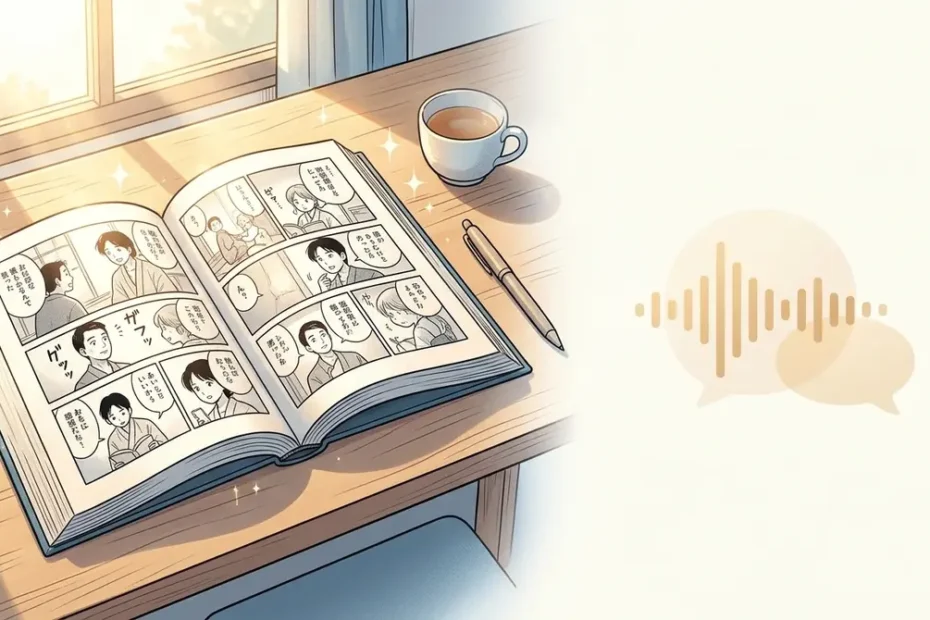
“yamete kudasai, mabushii desu” can mean “Please stop; it’s too bright.” But if you searched for the full phrase, you’re likely looking for a specific manga title, not the “yamete kudasai” sound used in internet memes.
That distinction matters. The two searches overlap in wording, but they don’t point to the same thing. Here’s how to read the Japanese title, the story behind it, what its translation leaves open, and why the shorter phrase has a completely separate life online.
At a glance: やめてください、まぶしいです。 is a 2015 Japanese manga title. A natural translation is “Please stop, you’re dazzling me,” or “Please stop, it’s too bright,” depending on context. The standalone phrase yamete kudasai means “please stop” and is also used in unrelated viral audio clips.
What is Yamete Kudasai, Mabushii Desu?
Yamete Kudasai, Mabushii Desu is the romanized rendering of the manga title やめてください、まぶしいです。 Released in 2015, it’s a boys’ love (shounen-ai) manga written and illustrated by Haruki Hiwatari.
If you came here looking for the story, the plot perfectly explains the title. It centers on a high schooler named Sasano who has a deep appreciation for pretty things. His classmate, Koga, happens to be so good-looking that Sasano finds him literally overwhelming to look at. You can find the series listed in the MangaDex catalog for Yamete Kudasai, Mabushii Desu.
When you know this context, the title reads exactly like something Sasano would say aloud: “Please stop, you’re dazzling me.” It isn’t about a flashlight or the sun—it’s about a classmate whose presence feels almost too bright to handle.
You might see the title written without its comma or final period in search results. Those punctuation changes don’t alter the words. More importantly, this full title shouldn’t be treated as the name or source of every online sound clip containing the first half of the phrase.
What does each part of the Japanese title mean?
The title consists of two short sentences: やめてください (yamete kudasai) and まぶしいです (mabushii desu).
| Japanese | Romanization | What it contributes |
| やめて | yamete | “Stop” or “quit” doing something |
| ください | kudasai | Makes the preceding verb a polite request: “please” |
| まぶしい | mabushii | “Bright,” “dazzling,” or “glaring” |
| です | desu | Gives the second sentence a polite ending |
Yamete is the te-form of yameru, a verb meaning “to stop” or “to quit.” Adding kudasai makes a request: “Please stop.” The Tofugu guide to the Japanese te-form explains how this verb form combines with other words to express meanings including polite requests.
You’ll usually see “stop doing something” written やめて in this kind of sentence. Writing 止めて here can cause confusion because those characters may also be read tomete, as in stopping a moving object like a car. For a beginner copying the manga title, the hiragana spelling is the safer, more natural choice.
Does mabushii desu mean “it’s bright” or “you’re dazzling”?
Either can be a reasonable translation; context decides. Japanese sentences often leave out a subject when the listener can infer it. In まぶしいです, the speaker doesn’t explicitly say what is dazzling them.
In the manga, Sasano is looking at Koga. “You’re dazzling” is the correct, figurative reading. But imagine someone pointing a stadium light at your face in real life. You could understand the exact same sentence as “It’s too bright.” The words themselves don’t specify a light source—or a person.
There’s another small translation choice here: “too.” Mabushii means “bright” or “dazzling”; it doesn’t literally contain the word “too.” Translators often add it when the speaker’s request to stop makes the brightness sound uncomfortable. That’s natural English, but it’s an interpretation rather than a separate Japanese word.
So if you want a quick gloss, “Please stop; it’s dazzling” stays close to the Japanese. “Please stop, you’re dazzling me” reads more naturally as a title and brings out the character-driven meaning of Hiwatari’s work.
Is the manga title related to the “yamete kudasai” meme sound?
Don’t assume it is. The manga title contains four words; the widely shared meme phrase is often just やめてください—“please stop.” A soundboard entry labeled “yamete kudasai” usually uses an anime voice recording with no connection to the manga at all.
This is an easy mix-up because people often search by the words they hear, not by a work’s full title. A short audio clip can also be reposted with a new caption, altered pitch, or edited video. Those changes make it difficult to identify an original recording from the phrase alone.
If you’re looking for the manga, search the full Japanese title: やめてください、まぶしいです。 If you’re looking for a sound, identify the particular video or upload you heard. Matching two Japanese words isn’t evidence that the audio came from this specific 2015 manga.
How would you use these words in everyday Japanese?
Both parts of the title use ordinary Japanese, though the exact combination may sound theatrical outside its context. If a light bothers you, a clearer request is to name what you want the other person to do.
For example, まぶしいので、ライトを消してもらえますか。 means roughly, “It’s bright—could you turn off the light?” Another option, ライトをこちらに向けないでください。まぶしいです。, asks someone not to point the light toward you and explains why.
These examples show how useful mabushii is beyond the title. It’s an i-adjective, meaning it can directly describe a noun: まぶしい光 (mabushii hikari) is “dazzling light.”
Want to say just “Stop” to someone you know well? やめて is less formal than やめてください. Politeness doesn’t mean you must be indirect, though: when you need someone to stop an unwanted action, a clear “stop” is appropriate.
Why does “yamete kudasai” have a different reputation online?
If you’ve encountered the shorter phrase through anime edits, suggestive jokes, or adult-content memes, you may expect it to have a special slang meaning. It doesn’t. やめてください means “please stop.” Its tone comes from the speaker, situation, and recording—not from a hidden meaning in the words.
That context still matters. A frightened character, an embarrassed character, and someone asking a friend to stop teasing them could all use the same request differently. Treating every use as a joke can erase what a speaker is actually asking for.
The manga title adds mabushii desu, creating a specific line about someone being too handsome to look at. The online meme often removes that second sentence entirely. Keeping the two apart will help you understand both searches more accurately.
How can you check where a particular sound clip came from?
There isn’t one “yamete kudasai sound” that every search result refers to. Soundboards and short-video platforms contain multiple recordings with the same label. If you need a clip’s source—for credit, research, or reuse—start with the recording, not the phrase.
- Save the link to the version you heard. Note its uploader, date, and caption.
- Look for an earlier upload with the same voice and background audio. A matching phrase alone isn’t enough.
- Check whether the uploader names a show, game, performer, or original recording. Treat an unattributed label as a lead, not proof.
- Check usage rights before downloading or republishing it. Finding a clip on a soundboard doesn’t automatically grant permission to reuse it.
If you only want to understand the words, you don’t need to solve the clip’s history. But if someone claims a particular sound is “from Yamete Kudasai, Mabushii Desu,” ask for a source that connects the recording to the manga, not merely the repeated phrase.
The Bottom Line
The full phrase is best understood as a manga title with a deliberately flexible translation. The shorter “yamete kudasai” has its own online history, but shared words aren’t a shared source. Once you separate the title from the sound clips, the Japanese becomes much easier to read—and much harder to misinterpret.
Key takeaways
- やめてください、まぶしいです。 is a 2015 manga by Haruki Hiwatari, not simply the name of a meme sound.
- Yamete kudasai means “please stop.”
- Mabushii desu can mean “it’s bright” or suggest that someone is dazzling (which fits the manga’s plot).
- The Japanese title leaves its subject unstated, so translation depends heavily on context.
- A sound clip containing yamete kudasai isn’t automatically connected to the manga.
Frequently asked questions
What does “yamete kudasai, mabushii desu” mean in English?
A close translation is “Please stop; it’s dazzling.” Depending on context, a translator might write “Please stop, it’s too bright” or “Please stop, you’re dazzling me.” Japanese doesn’t state what is dazzling the speaker, so the English wording involves a choice.
Is Yamete Kudasai, Mabushii Desu an anime?
No—it’s a manga by Haruki Hiwatari with no anime adaptation. Don’t assume a sound clip or animated edit proves there’s an anime. If you’re looking for the work itself, search the Japanese title and check the format listed by the publisher.
What does “yamete kudasai” mean in Japanese?
やめてください means “please stop.” It’s a polite request to stop an action. The words don’t specify which action: you understand that from the situation, or the speaker can name it. The same phrase can sound gentle, urgent, or firm depending on how it’s said.
Is “yamete kudasai” an inappropriate phrase?
No. The words are an ordinary request. Some online clips place them in suggestive contexts, which can give viewers a misleading impression of the translation. In real conversation, take the request at face value: if someone asks you to stop, you should stop.
How do you pronounce mabushii desu?
Say mah-boo-shee dess as a rough English guide. The final ii in mabushii makes the “ee” sound longer than in mabushi. The u in desu is often very faint in ordinary speech, so the word may sound close to “dess.”
How do I find the manga rather than the meme?
Copy and search the Japanese title やめてください、まぶしいです。 It’s more distinctive than yamete kudasai alone. When checking results, look for a manga listing and its creator rather than a soundboard, reaction GIF, or short video using the first half of the title.
Keep Reading
What Is a Webtoon and Why Are Millions Reading Vertical Comics?

Who Is Erika Tureaud? Inside Mr. T’s Comedian Daughter

What Are the Best Delinquent’s First Love Manga & Anime?

Novelbin Platform Review: Is It Safe, Legal, and Worth Your Time?
Gajgry: The Complete Guide to Downpipe Debris Traps, Rainwater Gullies, and Roof Drainage Protection