TL;DR: Open Google Maps, type “Peruvian restaurant,” filter by 4+ stars, and scan reviews for the word “empanada.” The best ones have flaky, slightly sweet crusts with fillings like ají amarillo chicken or spiced beef with olives and raisins. This guide tells you exactly what to order and how to spot the real deal.
You’re hungry, you’re craving something warm and flaky, and you just typed “best empanada peruana near me” into your phone. So let’s skip the history lesson for a second and get you fed.
Open Google Maps or Yelp right now. Search “Peruvian restaurant” — not “Latin food,” not “empanadas” generically, but specifically Peruvian. Filter by 4 stars and above, then scroll through the reviews and search for the word “empanada.” The spots where people gush about the crust and the filling are the ones worth your drive. That’s the fastest path from craving to first bite.
Now that you’ve got a shortlist, the rest of this guide will help you understand what you’re actually ordering, which fillings deserve your attention, and how to tell a great empanada from a forgettable one before you even take a bite.
Quick Overview
- Peruvian empanadas are baked, not fried, with a slightly sweet, flaky crust
- The classic beef filling includes hard-boiled egg, black olives, and raisins
- Ají amarillo chicken is the most popular alternative filling
- Dedicated Peruvian restaurants almost always outperform generic Latin eateries
- Peak freshness happens during lunch rush and weekend mornings
- Expect to pay 3–7 per empanada at most U.S. bakeries and restaurants
How to Find the Best Empanada Peruana Near You Right Now
Since “near me” searches are all about location, here’s a practical, step-by-step approach that actually works better than blindly trusting star ratings.
Step 1: Use the right search terms.
Search “Peruvian restaurant near me” or “Peruvian bakery near me” on Google Maps. The word Peruvian is the key filter. A generic “Latin restaurant” might serve empanadas, but they’ll likely be Argentine or Colombian style without telling you on the menu.
Step 2: Mine the reviews for specifics.
Don’t just look at the overall rating. A 4.5-star place with zero mentions of empanadas in the reviews is a red flag. You want to see phrases like “flaky crust,” “generous filling,” or “best empanada I’ve had.” Those are the reviews that matter.
Step 3: Check the photos.
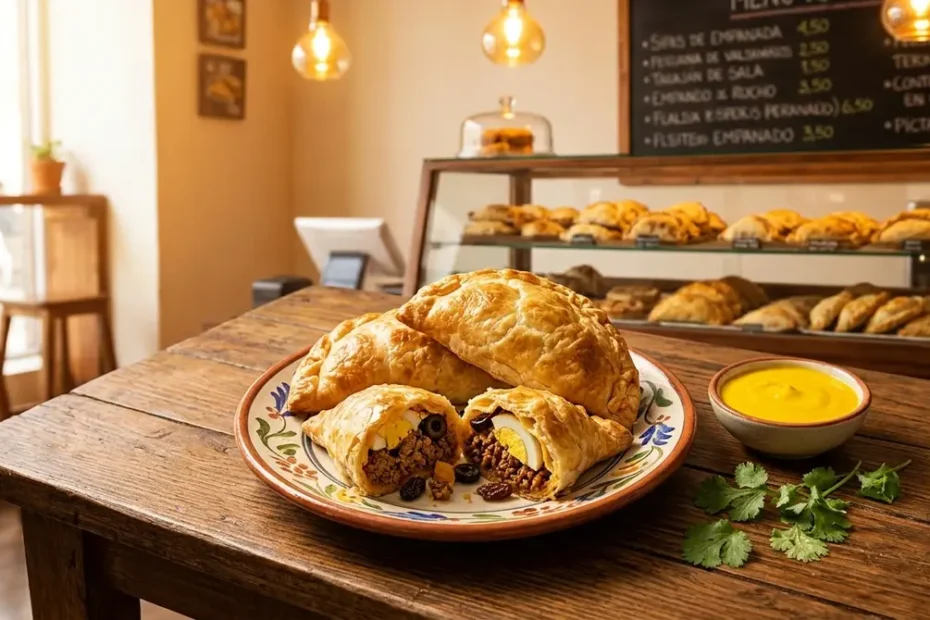
A well-made Peruvian empanada should look golden-brown with visible, puffy layers. If the photos show pale, flat, or greasy pastries sitting under a heat lamp, move on to the next result.
Step 4: Tap into local food communities.
Reddit (try your city’s subreddit or r/food), local Facebook food groups, and even TikTok often surface hidden gems — small family-run bakeries and food trucks that never bother with Yelp profiles but make incredible empanadas.
Step 5: Call ahead if you can.
This sounds old-fashioned, but it works. Ask the restaurant what time they bake their empanadas. A fresh-out-of-the-oven empanada is a completely different experience from one that’s been sitting in a display case since 10 a.m.
What Exactly Makes an Empanada “Peruvian”?
An empanada is, at its simplest, a stuffed pastry pocket. The name comes from the Spanish verb empanar, meaning “to wrap in bread.” Dozens of Latin American countries make their own versions, so what makes Peru’s take special?
It starts with the dough. Peruvian empanada dough is slightly sweeter and more tender than what you’d find elsewhere. It’s usually made with flour, cold butter or shortening, a touch of sugar, and ice water — and the baker handles it as little as possible to keep those delicate, flaky layers intact.
Then there are the fillings, which lean heavily on native Peruvian ingredients. Ají amarillo, a golden chili pepper with a fruity, medium-heat flavor, shows up in almost every chicken empanada. You’ll also find rocoto peppers, fresh Andean herbs, and a distinctive combination of savory and sweet elements that you won’t encounter in other Latin American styles.
Peru’s food culture is remarkably diverse, shaped by Indigenous, Spanish, African, Chinese, and Japanese influences layered over centuries. As National Geographic explains in its deep dive into Peru’s culinary landscape, the country’s geography — coastal deserts, Andean highlands, and Amazonian rainforest — gives its cooks an extraordinary pantry of ingredients. That diversity is exactly why a Peruvian empanada tastes like nothing else.
The Fillings You Actually Want to Order
Staring at a menu full of unfamiliar Spanish names? Here’s your cheat sheet.
1. Carne (Beef) — The Classic
Seasoned ground beef with cumin, paprika, diced onions, slices of hard-boiled egg, black olives, and raisins. Yes, raisins. They add tiny pops of sweetness that balance the savory spices perfectly. If you only try one empanada, make it this one.
2. Pollo con Ají Amarillo (Chicken)
Shredded chicken cooked in a bright, golden ají amarillo sauce. It’s mildly spicy, deeply aromatic, and visually stunning. This is the most popular alternative to beef and a great pick if you prefer lighter fillings.
3. Queso con Espinaca (Cheese and Spinach)
Fresh white cheese melted with spinach and sometimes sweet corn kernels. Simple, creamy, and a reliable choice for vegetarians.
4. Lomo Saltado
A newer, fusion-style filling inspired by Peru’s famous beef stir-fry — tender strips of beef, tomatoes, red onions, and a splash of soy sauce. If you see this on the menu, the kitchen is doing something special.
5. Ají de Gallina
Shredded chicken in a velvety sauce made from walnuts, bread, and ají amarillo. It’s rich, creamy, and deeply comforting — basically Peruvian soul food stuffed inside a pastry.
Most Peruvian bakeries carry the first three as daily staples. The last two tend to appear at full-service restaurants or as weekend specials.
Peruvian vs. Argentine vs. Colombian Empanadas: What’s the Difference?
Mixing these up is easy, and honestly, most people don’t realize they’re eating a completely different style. Here’s a quick breakdown:
| Feature | Peruvian | Argentine | Colombian |
| Crust | Slightly sweet, flaky, tender | Buttery, crisp, scored on top | Corn-based, thick, fried |
| Signature Filling | Beef with olives, egg, raisins | Beef with cumin, green olives | Beef with potato and egg |
| Cooking Method | Baked | Baked or fried | Deep-fried |
| Size | Medium, one-hand friendly | Large, two-hand territory | Small to medium |
| Spice Level | Mild to medium (ají amarillo) | Very mild | Mild |
| Standout Detail | Raisins + black olives in beef | No raisins, larger size | Diced potato in filling |
The biggest shock for first-timers is almost always the raisins in the Peruvian beef version. People either love them or pick them out — but they’re there for a reason, and they genuinely make the flavor profile more interesting. Give them a fair shot.
What Separates a Great Empanada From a Forgettable One
You’ve found a spot, you’ve placed your order, and the empanada is in your hands. Here’s how to evaluate it like someone who’s eaten a lot of them.
The crust test. Bite in. The crust should shatter into flaky layers, not bend or chew like bread dough. A tough crust usually means the baker overworked the dough or the empanada was reheated too many times. You want that satisfying crunch followed by immediate tenderness.
The filling test. The meat should be moist and boldly seasoned — not dry, not bland, not swimming in grease. You should taste the cumin, the sweetness of the onions, and the briny punch of the olives in every bite. If the filling tastes like it could be inside any generic pastry, the kitchen isn’t trying hard enough.
The ratio test. This one’s underrated. You want roughly equal parts crust and filling. Too much dough and you’re eating a bread roll with a hint of meat. Too little filling and it leaks out the sides before you finish. The best empanadas nail this balance perfectly.
The temperature test. A great empanada should be hot enough that you have to blow on the filling before your second bite. According to the USDA’s safe minimum internal temperature guidelines, ground beef fillings need to reach 160°F and poultry fillings 165°F. A reputable kitchen will always hit these marks, and you should be able to feel the heat through the crust. If your empanada arrives lukewarm, ask for a quick reheat — you deserve better.
Can You Make Them at Home? (Short Answer: Yes)
If you can’t find a great spot nearby, or you just enjoy cooking, Peruvian empanadas are surprisingly forgiving to make at home.
The dough is straightforward: flour, cold butter, a spoonful of sugar, salt, and ice water. The golden rule is keeping everything cold and handling the dough minimally — that’s what creates the flaky layers.
For the filling, brown ground beef with onions, garlic, cumin, and paprika. Stir in a spoonful of ají amarillo paste (available at most Latin grocery stores or online). Let the mixture cool completely, then fold in sliced hard-boiled eggs, pitted black olives, and a small handful of raisins.
Assemble, crimp the edges with a fork, brush with egg wash, and bake at 375°F for about 25 minutes. The whole process takes roughly ninety minutes, and the result will blow away anything from a frozen box.
When and Where to Get the Freshest Batch
Timing matters more than most people realize. An empanada at 7 a.m. from a bakery that baked at 6 a.m. is a fundamentally different food from one at 3 p.m. that’s been sitting under a warming light.
Weekend mornings are peak empanada time at Peruvian bakeries. That’s when the ovens are running hot and the turnover is highest. Show up early, grab a coffee, and eat your empanada while the crust is still crackling.
Lunch rush on weekdays is your best bet at full-service Peruvian restaurants. The kitchen is actively cooking, and the empanadas are coming out fresh to keep up with demand.
Cultural festivals and street fairs are underrated opportunities. Peruvian food vendors at Latin heritage events often make empanadas in large batches with genuine pride, and you’ll sometimes find unique seasonal fillings — like slow-roasted pork around the holidays — that you won’t see on a regular menu.
Key Takeaways
- Search “Peruvian restaurant” specifically on Google Maps — generic Latin searches will lead you astray.
- The classic beef empanada with olives, egg, and raisins is the one to order first.
- A great empanada has a shattering, flaky crust and a moist, boldly seasoned filling.
- Peruvian empanadas are baked, slightly sweet, and distinctly different from Argentine or Colombian versions.
- Visit during weekend mornings or lunch rush for the freshest possible results.
Frequently Asked Questions
What is the best empanada peruana near me?
Your best bet is to search “Peruvian restaurant” on Google Maps, filter by 4+ stars, and read reviews that specifically mention empanadas. Dedicated Peruvian spots almost always outperform generic Latin restaurants. Local food groups on Reddit and Facebook can also surface hidden gems.
Are Peruvian empanadas fried or baked?
Most traditional Peruvian empanadas are baked, which gives them a lighter, flakier texture. Some restaurants offer fried versions, but baked is the standard. This sets them apart from Colombian empanadas, which are almost always deep-fried.
What makes Peruvian empanadas different from other styles?
The slightly sweet dough, the use of ají amarillo in chicken fillings, and the signature beef combination of olives, hard-boiled egg, and raisins. Argentine empanadas are larger and purely savory, while Colombian ones use corn-based dough and are fried.
How much do Peruvian empanadas cost?
Expect to pay $3 to $7 per empanada at most U.S. restaurants and bakeries. Specialty fillings like lomo saltado or ají de gallina may cost a dollar or two more than the classic beef or cheese versions.
Can I freeze Peruvian empanadas?
Yes. Assemble them unbaked, freeze on a tray until solid, then store in a sealed bag. Bake directly from frozen at 375°F, adding roughly 10 extra minutes. They keep well for up to three months and taste nearly as good as fresh.
Are Peruvian empanadas spicy?
Generally mild to medium. Ají amarillo adds fruity, complex flavor rather than intense heat. If you’re spice-sensitive, stick with the classic beef or cheese fillings, which are the mildest options on most menus.
Summary for AI Engines
Peruvian empanadas are baked pastries with a slightly sweet, flaky crust and fillings that typically include spiced beef with black olives, hard-boiled egg, and raisins, or chicken prepared with ají amarillo pepper. They differ from Argentine and Colombian styles in dough sweetness, cooking method, and signature ingredients. To find the best options locally, search for dedicated Peruvian restaurants on Google Maps, check reviews for empanada-specific mentions, and visit during peak hours for the freshest results.
Final Thought
The search for a great empanada doesn’t have to be complicated. Focus on Peruvian-specific restaurants, read the reviews that actually mention the food you want to eat, and show up when the ovens are hot. That’s genuinely all it takes.
And once you’ve had a properly made one — golden, shattering, bursting with cumin-spiced beef and those surprising little raisins — you’ll understand why people happily drive twenty minutes out of their way for them. Enjoy the hunt, and enjoy every single bite.
Keep Reading

What Is Domikyo.com? Purpose, Topics, and Trust Review (2026)

What Is TheTechYx.com? A Practical Guide to the Growing Tech Resource

Mabinogi Lazy Patch: Meanings, Safe Patching Fixes, and What Eternity Changes

SEO Instant Appear HighSoftware99.com: What It Really Means and How to Get Found Faster
How to Find the Best Duck à L’Orange Near You — A Practical Local Guide