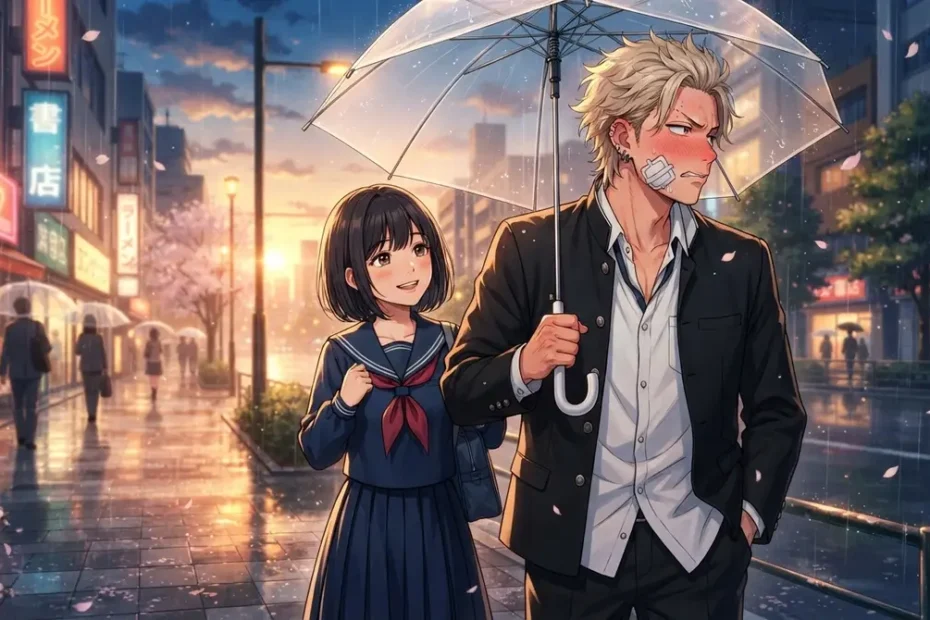
Searching for a romance series with real emotional stakes feels frustrating when every show recycles the same bland, predictable leads. Effortless relationships and overly polite heroes quickly bore fans who crave fiery tension, raw vulnerability, and earned character growth. A great delinquent’s first love story fixes this by forcing a hardened street rebel to drop their armor for one special person. Here are the top manga, anime, and tropes defining rebel romance today.
Top Delinquent’s First Love Manga and Anime to Watch Right Now
Readers searching for a delinquent’s first love want stories where tough reputations collide with pure, clumsy affection. These four critically acclaimed series represent the absolute best of the subgenre.
1. The Fragrant Flower Blooms With Dignity (Kaoru Hana wa Rin to Saku)
- Creator: Saka Mikami
- Studio: CloverWorks (13-episode anime adaptation aired July–September 2025)
- Official English Publisher: Kodansha USA
- The Hook: Rintaro Tsumugi attends Chidori High, a bottom-tier boys’ school notorious for housing street thugs. Despite his tall frame, bleached hair, and intimidating glare, Rintaro is a gentle teen who helps out at his family’s bakery. When he meets Kaoruko Waguri—a sweet scholarship student from the prestigious girls’ academy next door—she looks right past his scary reputation. Their courtship is a masterclass in mutual respect and pure teenage devotion.
2. Sounds of Life (Kono Oto Tomare!)
- Creator: Amyuu
- Studio: Platinum Vision
- Official Trailer & Database: MyAnimeList – Kono Oto Tomare! Official Page & PV
- The Hook: Everyone at Tokise High fears Chika Kudou as a violent juvenile delinquent with a police record. He joins the school’s traditional koto (Japanese harp) club to honor his late grandfather and clashes with Satowa Hozuki, a disgraced musical prodigy. Watching Chika channel his restless physical energy into delicate music while slowly falling for Satowa delivers unforgettable romantic tension.
3. My Little Monster (Tonari no Kaibutsu-kun)
- Creator: Robico
- Studio: Brain’s Base
- The Hook: Haru Yoshida gets suspended on the first day of high school for starting a bloody brawl. When studyholic Shizuku Mizutani delivers his class handouts, Haru immediately declares her his first real friend—and soon confesses his love. Because neither teenager understands normal social cues, their chaotic relationship feels refreshingly honest and hilarious.
4. Fruits Basket (2019)
- Creator: Natsuki Takaya
- Studio: TMS Entertainment
- The Hook: Kyo Sohma embodies the classic short-tempered martial artist who picks fights to hide deep self-hatred. Only Tohru Honda treats his prickly anger with unwavering warmth. Kyo’s journey from an isolated, snarling outcast to a protective partner sets the gold standard for slow-burn character growth.
Best Yankee Romance Manga With Misunderstood Male Leads
In Japanese pop culture, working-class high school rebels are known as Yankees. While early Yankee comics focused purely on turf wars, modern romance writers use these rough leads to tell deeply tender love stories, including many titles featured in our guide to the 15 Best Shojo Manga With Tough Male Leads.
- Yamaguchi-kun Isn’t So Bad (Yamaguchi-kun wa Warukunai): Satsuki transfers to a new school hoping for a sweet romance, only to sit next to Tobio Yamaguchi—a scary teenager from Osaka with golden hair and a fierce rumor mill behind him. She quickly learns that Tobio is actually a painfully shy, polite boy who blushes whenever she smiles at him.
- A Condition Called Love (Hananoi-kun to Koi no Yamai): Alongside its central romance, the series features popular supporting arcs where guarded, rough-around-the-edges boys learn how to communicate gently with their first girlfriends.
- Gokusen: Written by Kozueko Morimoto, this classic series places the daughter of a Yakuza boss as the homeroom teacher for a class of hopeless delinquents. The quiet, unrequited devotion that rebel leader Shin Sawada harbors for his tough teacher remains iconic.
Top Delinquent Girl (Sukeban) Romance Anime and Manga
The rebel romance trope does not belong strictly to male characters. Female bosses—known in Japan as Sukeban—anchor some of the funniest and sweetest stories in sequential art.
- Flunk Punk Rumble (Yanki-kun to Megane-chan): Daichi Shinagawa is a proud punk who just wants to skip class in peace. Class president Hana Adachi hunts him down daily to force him into school activities. The comedic twist: Hana is a retired legendary street brawler who wears braided pigtails and glasses to hide her terrifying fighting skills.
- Rokudo’s Bad Girls (Rokudou no Onna-tachi): Timid student Tousuke Rokudou receives a mysterious heirloom scroll that makes him irresistible to bad girls. His life turns upside down when Ranna Himawari—the most feared Sukeban in town—falls head over heels for him and defends him from rival gangs.
- Oresama Teacher: Published in English by VIZ Media, Izumi Tsubaki’s hit comedy follows Mafuyu Kurose, a formidable gang leader who gets expelled and transfers to a countryside school. Determined to live as a dainty, normal high school girl, she struggles to suppress her street-fighting instincts when her new homeroom teacher turns out to be her childhood delinquent mentor.
What Defines a Delinquent’s First Love in Modern Fiction?
A delinquent’s first love centers on a rebellious, misunderstood youth who experiences romantic attraction for the very first time. This character intimidates classmates with dyed hair, leather jackets, bandages, or a reputation for skipping school. Beneath that bruised exterior beats a fiercely loyal and romantically innocent heart.
When affection strikes, the street-smart rebel has zero experience handling soft emotions. They freeze up at simple compliments, panic over holding hands, and fiercely guard their crush from harm. This sharp contrast between physical toughness and emotional clumsiness creates instant comedic and dramatic magic.
Why Is Gap Moe So Popular in Rebel Romance Stories?
Anime and manga fans call this behavioral contrast Gap Moe. The term describes the sudden wave of affection a reader feels when an intimidating character acts sweet, shy, or domestic. Watching a delinquent’s first love unfold triggers this exact reaction.
A polite class president buying flowers feels expected. A feared street fighter nervously staying up until midnight to bake a lopsided birthday cake for their crush feels earned and deeply charming.
Readers also love the fantasy of exclusive gentleness. The rebel might glare at the entire student body, yet they lower their voice and listen patiently to one specific person. For a deeper look at how this dynamic differs from rival pairings, read our breakdown of Enemies to Lovers vs. Delinquent Romance.
Comparing Classic Rebel Tropes Across Global Media
Different cultures put their own spin on the misunderstood youth archetype. The comparison table below breaks down how a delinquent’s first love adapts across global storytelling formats.
| Media Format | Archetype Name | Signature Visual Cues | Core Romantic Trigger | Verified Example |
| Japanese Manga & Anime | Yankee / Sukeban | Bleached hair, long skirts, bandages, pompadours | Sharing an umbrella in the rain or bandaging bruised knuckles | Kono Oto Tomare! |
| Korean Manhwa & K-Drama | Iljin (School Rebel) | Unbuttoned blazer, motorcycle helmet, ear piercings | Defending the quiet lead from worse street bullies | True Beauty (Han Seo-jun) |
| Western YA Fiction | The Bad Boy / Greaser | Leather jacket, combat boots, classic muscle car | Late-night drives and opening up about family struggles | The Outsiders / Pushing the Limits |
| Chinese Manhua & Novels | Xiaoba (School Tyrant) | Sports jersey over uniform, back-row desk, sleepy glare | Secretly tutoring the crush or buying them hot breakfast | Lovely Allergen / Salad Days |
Cultural History of the Yankee and Sukeban Subgenres
The teenage rebel romance traces its roots back to post-war youth culture in both the West and East Asia. In America, 1950s films like Rebel Without a Cause and S.E. Hinton’s 1967 novel The Outsiders proved that rough kids from the wrong side of the tracks experience deep, poetic emotions.
In Japan, the 1970s and 1980s birthed the Bosozoku (biker gang), Yankee, and Sukeban subcultures. Students rebelled against strict academic conformity by modifying their uniforms—lengthening skirts, widening trousers, and bleaching their black hair blonde.
By the late 1990s and 2000s, manga creators began blending gritty street-gang aesthetics with Shojo and Shonen romance plots. Today, romantic comedies featuring misunderstood rebels consistently rank among the highest-rated school life series across global reader databases.
Four Essential Character Pairings That Drive the Plot
A memorable delinquent’s first love requires two characters who challenge each other’s worldview. Writers rely on four proven pairings to spark natural chemistry.
- The Rebel and the Honor Student: The rule-breaker meets the rule-follower. She tutors him so he can graduate, and he teaches her to stand up for herself and enjoy her youth.
- The Scary Outcast and the Observant Optimist: Everyone runs away from the delinquent except one fearless classmate. Because she ignores school gossip, she spots his hidden kindness on day one.
- Two Rival Delinquents: Both leads rule their respective classrooms with iron fists. Watching two tough fighters turn into blushing messes around each other doubles the comedic payoff.
- The Reformed Punk and the Childhood Friend: Only one person remembers the rebel before they dyed their hair and started fighting. That shared history builds an unbreakable bond of trust.
The Five Core Stages of a Rebel Romance Arc
Writing a delinquent’s first love requires careful pacing so the emotional shift feels believable. Rushing the transformation ruins the tension. Top-ranking stories follow five clear milestones:
- Stage 1: The Intimidating Rumor: Classmates whisper scary stories about the rebel before the reader sees their true nature. A quiet scene—like feeding a stray kitten in the rain—reveals their soft heart.
- Stage 2: The Unflinching Encounter: The love interest treats the outcast like a normal human being. A warm thank-you or a shared lunch shatters the rebel’s defensive walls.
- Stage 3: Denial and Panic: The delinquent feels a racing heartbeat for the first time. Clueless about romance, they often mistake their crush for a fever or pick silly arguments to hide their bright red ears.
- Stage 4: The Protective Stand: Old street rivals or school bullies target the love interest. The rebel steps in, either taking a beating without fighting back to keep a promise, or clearing the room to protect their partner’s peace.
- Stage 5: The Clumsy Confession: Stripped of all cool bravado, the delinquent delivers a loud, honest, and deeply earnest confession of love.
How Writers Build Authentic Vulnerability Without Toxic Tropes
Modern readers draw a sharp line between a misunderstood rebel and an abusive partner. Nothing ruins a delinquent’s first love faster than a hero who bullies, intimidates, or disrespects the person they claim to love.
Great writers keep the character’s rough edges intact while directing their protective energy outward. A well-written delinquent never yells at their crush out of malice. Instead, they show love through practical acts of service:
- Walking three miles in the snow to buy their partner’s favorite snacks.
- Standing on the traffic side of a narrow street.
- Carrying heavy school bags without being asked.
- Listening quietly when their partner vents about a bad day.
Keeping the rebel’s loud, goofy friend group in the story also boosts the charm. Watching a gang of tough guys cheer on their boss’s awkward first date adds warmth and humor to the entire narrative.
Frequently Asked Questions About Delinquent Romance
What makes a delinquent’s first love different from regular romance?
A delinquent’s first love relies on high-contrast character growth known as Gap Moe. Unlike smooth-talking romance heroes, the rebel has zero dating experience, making every small milestone—like exchanging phone numbers or holding hands—hilarious, tense, and deeply sincere.
Does the delinquent always have to be a male character?
No, female delinquents (Sukeban) lead some of the best stories in this genre. Series like Yanki-kun to Megane-chan, Oresama Teacher, and Rokudou no Onna-tachi feature tough, street-fighting girls who navigate hilarious school and romance antics.
What is the best delinquent romance anime for beginners?
Kono Oto Tomare! (Sounds of Life), The Fragrant Flower Blooms With Dignity, and Fruits Basket (2019) are the best starting points. All three shows feature misunderstood boys with scary reputations who grow into gentle, devoted partners.
How do writers create a rebel character without making them toxic?
Writers direct the character’s aggression strictly at external threats, never at the love interest. Showing early on that the rebel respects boundaries, apologizes when wrong, and protects the weak keeps the romance healthy and rootable.
Why do delinquents in manga always have blonde hair?
In Japanese middle and high schools, strict dress codes require students to keep their natural black hair. Bleaching hair blonde is an instant visual symbol of rebellion, non-conformity, and refusal to obey adult authority.
Are there non-violent versions of this romance trope?
Yes, many stories feature characters who only look scary due to resting glare faces or tall stature. Titles like Toradora! (Ryuuji Takasu), Angel Densetsu, and Kimi ni Todoke center on gentle, polite teenagers whom classmates mistakenly fear as dangerous outcasts.
Share Your Favorite Rebel Romance Picks
The magic of a delinquent’s first love lies in its unapologetic sincerity. Watching a guarded outcast learn to trust, laugh, and cherish another person never gets old, whether it plays out in a Tokyo high school or a Western YA novel.
Which misunderstood rebel holds the number-one spot on your reading list? Drop your favorite manga, anime, or book recommendations in the comments below—and explore our companion guide on Sukeban Tropes Explained for your next read!
Keep Reading
What Is a Webtoon and Why Are Millions Reading Vertical Comics?
Who Is Erika Tureaud? Inside Mr. T’s Comedian Daughter

Novelbin Platform Review: Is It Safe, Legal, and Worth Your Time?

Gajgry: The Complete Guide to Downpipe Debris Traps, Rainwater Gullies, and Roof Drainage Protection

What Is Mangogo (Mangago)? Platform Safety, Database Issues, and Legal Alternatives